
Hedge Trimming in the High Weald: When to Cut, How Often, and What to Expect
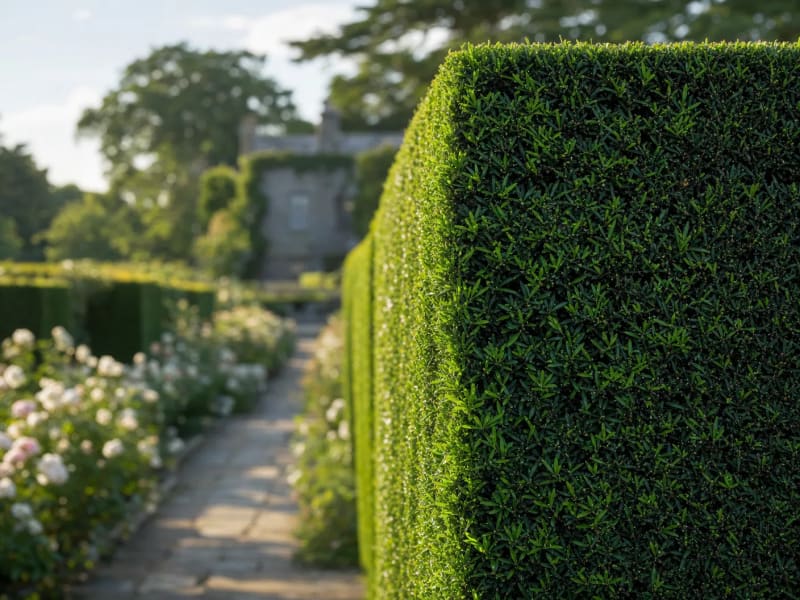
Hedges are among the most distinctive and valued features of High Weald gardens. In the lanes and properties around Mayfield, Heathfield, Horam and Five Ashes, mature hedges define boundaries, create sheltered garden rooms, provide privacy from the road, and give a garden the sense of established permanence that no fence or wall can replicate. But a hedge that is cut at the wrong time, with the wrong technique, or left without attention for too long, can quickly become a problem rather than a feature.
This guide covers the key things that East Sussex homeowners need to understand about hedge trimming — the right timing for different species, how often different hedges need cutting, what you should expect from a professional service, and why the High Weald's particular landscape and climate makes local knowledge genuinely valuable.
### Why Timing Matters More Than Most Homeowners Realise
The single most important variable in hedge trimming is timing, and it is one that is frequently mishandled. There are two critical windows to understand: the nesting season, and the species-appropriate growth cycle.
From the beginning of March through to the end of July, active bird nests are commonly present in hedges throughout East Sussex. Under the Wildlife and Countryside Act 1981, deliberately damaging or destroying an active bird nest is a criminal offence. Any reputable gardening or hedging company will check carefully for nesting activity before cutting begins, and will defer work if nests with eggs or young birds are found. Homeowners who cut their own hedges during this window without checking risk serious consequences — and significant harm to the wildlife that depends on the hedge for shelter.
Outside the nesting window — from August through to late February — trimming can proceed safely, but the specific timing within that window should still be guided by the species and growth habit of the hedge in question.
### Trimming by Species: A High Weald Guide
**Box (Buxus sempervirens)** is one of the most commonly used formal hedging and topiary plants in the gardens around Mayfield and Heathfield. Box grows relatively slowly and is typically trimmed once in early to mid-summer — often late May or early June — and again in early autumn. Avoid trimming box in full sun, as the cut surfaces can scorch. Box is also currently under significant pressure from box moth caterpillar (Cydalima perspectalis) in East Sussex, and any trimming programme should be combined with regular monitoring and appropriate treatment.
**Yew (Taxus baccata)** is an extraordinary hedging plant — dense, dark, and long-lived — and many gardens in the High Weald have yew hedges that are decades or even centuries old. Yew is best trimmed once a year in late summer, typically August to early September in East Sussex. This single cut, carried out when growth has consolidated for the year, keeps yew tidy without stimulating excessive fresh growth before winter.
**Beech (Fagus sylvatica)** is widely used in East Sussex for its elegant habit and the characteristic copper-brown leaves it retains through winter, providing valuable visual structure when the rest of the garden is bare. Beech is best trimmed in late summer — typically August — which encourages the hedge to retain those dead leaves through the winter months. Trimming too early or too late can reduce this effect.
**Hornbeam (Carpinus betulus)** is similar to beech in its winter leaf-retention habit and its preferred trimming timing. Hornbeam is well suited to the heavier clay soils of the High Weald valley bottoms and is a robust choice for new boundary hedges.
**Privet (Ligustrum)** is a fast-growing species that typically requires two cuts per year — once in late spring and again in late summer — to prevent it becoming leggy and gappy at the base. Privet left uncut for extended periods tends to develop bare woody stems at the bottom and a dense canopy at the top, which is difficult to correct without hard renovation.
**Laurel (Prunus laurocerasus)** is a vigorous, large-leaved species common in East Sussex gardens as a dense boundary or privacy hedge. Because of its large leaves, laurel should ideally be cut with secateurs rather than mechanical hedge trimmers on the face and top, to avoid the unsightly browning of sliced leaves. In practice, many gardeners use a combination — trimmers for speed and volume, secateurs for finish. Laurel typically benefits from two cuts per year.
### How Often Do Different Hedges Need Cutting?
Frequency depends on the species, the size of the hedge, and the desired appearance. As a general guide:
Slow-growing formal hedges such as yew and well-established box typically need cutting once per year. Fast-growing informal hedges such as privet or some varieties of laurel may need cutting two or three times per year to remain tidy. Medium-pace formal hedges such as beech and hornbeam are best cut once in late summer. Native mixed hedgerows — hawthorn, blackthorn, hazel, field maple — are often managed on a two or three-year rotation rather than annually, cutting different sections in different years to maximise wildlife value.
For hedges in the High Weald, the generally mild, wet climate can extend the growing season at both ends, meaning growth continues later into autumn and starts earlier in spring than in drier or more northerly areas. This can mean that hedges here occasionally need one more cut per year than a general guide might suggest.
### What to Expect from a Professional Hedge Trimming Service
A professional hedging visit from Siran Gardening covers more than simply running a trimmer along the top and faces. Before cutting begins, we check the hedge carefully for any signs of active nesting. We assess the shape and size of the hedge against your preferences, noting any areas where the hedge has become gappy or uneven that may benefit from a different approach.
The cut itself is carried out with professional-grade battery-powered hedge trimmers — sharp, precise tools that give a much cleaner finish than worn domestic equipment. Faces are trimmed in a slightly tapered profile, wider at the base than the top, which allows light to reach the lower growth and prevents the base becoming bare and sparse over time.
After cutting, all trimmings are gathered and removed. Lawns and borders adjacent to the hedge are blown clean, and any large arisings are carefully raked from beneath the hedge.
Where a hedge has become significantly overgrown — particularly common after a period of neglect or a change of ownership — renovation trimming may be required. This involves a more significant reduction carried out in stages over one or two seasons, to bring the hedge back to a manageable size and shape without shocking the plant. Yew and hornbeam respond very well to renovation; beech moderately well; privet and laurel almost always come back vigorously.
### Hedge Care in the Context of East Sussex Wildlife
The High Weald is a landscape of extraordinary ecological richness, and hedges are a critical component of that. Well-managed hedges provide nesting sites for birds including sparrows, blackbirds, song thrushes, and dunnocks. They provide shelter and foraging corridors for hedgehogs, bats, and dormice. A hedge that is cut at the right time, left with adequate density, and managed over years with a light hand provides far greater wildlife value than one that is cut hard, frequently, or without regard to the season.
We approach hedging in the High Weald with this context in mind, choosing timing that protects nesting birds, leaving some untrimmed sections where appropriate for berrying and shelter, and advising on the management of native hedgerows in a way that balances the needs of the garden with the needs of the landscape around it.
Siran Gardening provides professional hedge trimming and shaping services throughout Mayfield, Heathfield, Horam, Five Ashes, Tunbridge Wells and Hailsham. Contact us to discuss your hedge and arrange a free quotation.